EcoFlow RIVER 2 Max
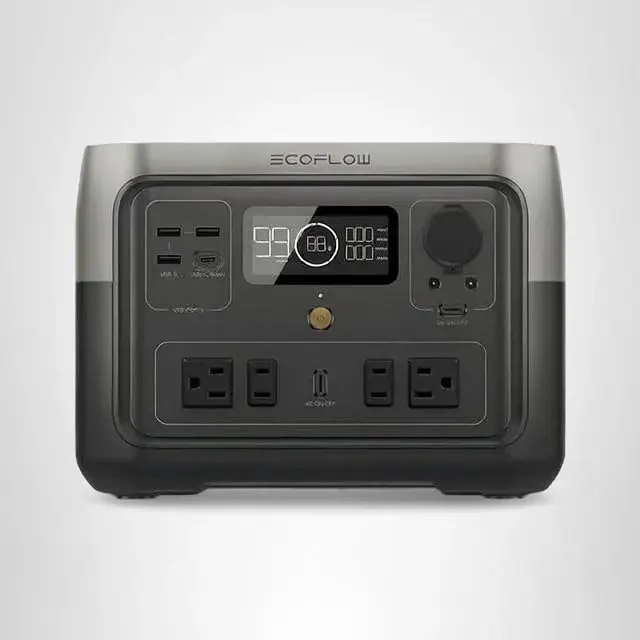
EcoFlow RIVER 2 Max is best suited for: baby monitor nursery backup, cpap, evacuation go bag (scored 93.7/100 for its top-fit use-case). Fully verified, ready to publish.
🛒 View Price on Amazon →As an Amazon Associate, we earn from qualifying purchases. This does not affect the score or ranking shown on this page.
The EcoFlow RIVER 2 Max is a mid-size portable power station with a 512Wh battery and a 500W continuous AC output (1000W surge). Its inverter is confirmed pure sine wave, so it runs CPAP machines and pump motors safely. It scores 93.7/100 for baby monitor nursery backup, its strongest fit in this dataset.
Best For
Full Specifications
| Brand | EcoFlow |
|---|---|
| Model | RIVER 2 Max |
| Category | standalone |
| Capacity | 512 Wh |
| Continuous AC Output | 500 W |
| Surge Output | 1000 W |
| Battery Chemistry | LiFePO4 |
| Inverter Type | Pure Sine Wave |
| Weight | 6 kg |
| Price | 470 USD |
| AC Recharge Time (0-100%) | 1 hrs |
| Max Solar Input | 220 W |
| Warranty | 5 years |
RIVER 2 Max carries EcoFlow’s 5-year tier (unlike the shorter-covered RIVER/RIVER Pro/Max/Plus). See the full warranty comparison across all brands →
At 500W continuous and 1000W surge, it cannot reliably start a typical well or sump pump motor. Its 512Wh battery runs a 75W CPAP with a heated humidifier for roughly 5.1 hours and a 100W mini-fridge for roughly 3.8 hours, after a 25% AC-inverter efficiency loss. At $470, that works out to $0.92 per watt-hour. It accepts up to 220W of solar input for off-grid recharging.
Pros & Cons
- Confirmed pure sine wave inverter — safe for CPAP and other sensitive electronics
- Fully verified — no open data gaps
- 5-year warranty — above average for this category
- None noted
Who Should Avoid This
No specific disqualifying weaknesses found in this dataset.
Methodology & Sources
Verified: 2026-09-13 · Confidence: High · Method v1.0